Your first media campaign is not just about getting one article. It is about building a reputation that lasts. For a FinTech startup in Ireland, that reputation is fragile. One wrong quote or a missed deadline can close doors. But a well-prepared campaign opens them – with journalists, investors and customers.
This guide walks you through every step. It is practical. It is local. It assumes you have zero experience with PR. By the end, you will have a clear checklist. And you will avoid the common mistakes that cost time and money.
Step 1: Define Your Real Goal
Before you write a single word, ask: what do we want from this campaign?
Do you want to attract Irish angel investors? Do you want to win enterprise clients in Dublin’s IFSC? Do you want to be seen as a thought leader in payments? Or do you simply want to be known by name in the tech community?
Each goal changes your message. For investors, you highlight growth metrics and team experience. For clients, you highlight security and ease of use. For thought leadership, you highlight your unique view on regulation.
Write down one primary goal. Not three. Not five. One. Then write down one secondary goal. That keeps your team focused.
In Ireland, the media landscape is small. A campaign that tries to please everyone pleases no one. Pick your target and aim straight.
Step 2: Know Your Irish Audience
Irish journalists are different from US or UK ones. They care about local impact. They care about jobs, regulation and consumer protection. They are skeptical of hype.
So before you pitch, research these three groups:
- Business editors at the Irish Times, Irish Independent and Business Post. They cover big deals and policy.
- Tech reporters at Irish Tech News, Silicon Republic and Fora. They cover startups, funding and innovation.
- Regional journalists in Cork, Galway, Limerick and Waterford. They care about local hiring and community.
Read their recent articles. Note their tone. Do they like data? Do they like founder stories? Do they quote academics or competitors?
Also understand the Central Bank of Ireland’s stance. Your campaign must align with their consumer protection rules. If you mention “safe” or “secure,” you must have proof. Overclaiming gets you a negative story, not a positive one.
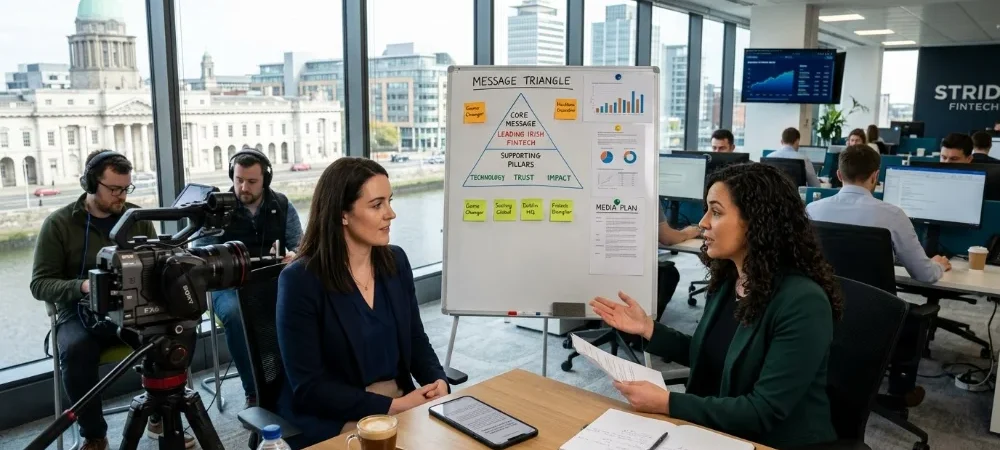
Step 2: Build Your Core Message Triangle
You need three messages. Each message is one sentence. Each sentence is simple.
- Message 1: What problem do you solve? Example: “We help Irish SMEs get paid in 24 hours instead of 30 days.”
- Message 2: How are you different? Example: “We use open banking, not credit checks, to approve loans.”
- Message 3: Why Ireland? Example: “We chose Dublin because of the talent pool and the regulator’s clear rules.”
Write these on a whiteboard. Every press release, every interview, every social post must link back to these three. If a journalist asks a different question, you pivot back to your triangle.
This keeps your story consistent. Journalists appreciate clarity. They will remember you as “the SME payments company” rather than “yet another fintech.”

Step 4: Choose Your Announcement Hook
A media campaign needs a news hook. You cannot just say “we exist.” That is not news.
Your hook could be:
- A funding round (even a small seed round works).
- A new product feature that solves a local pain point.
- A partnership with an Irish bank or retailer.
- A hiring milestone (e.g., “we hired our 20th employee in Cork”).
- A research report with original data about Irish consumer habits.
The hook must be timely. If you pitch a story that happened three weeks ago, it is old. Journalists want fresh angles.
For your first campaign, choose one strong hook. Do not bundle three announcements into one press release. That confuses the message. Save other news for later.
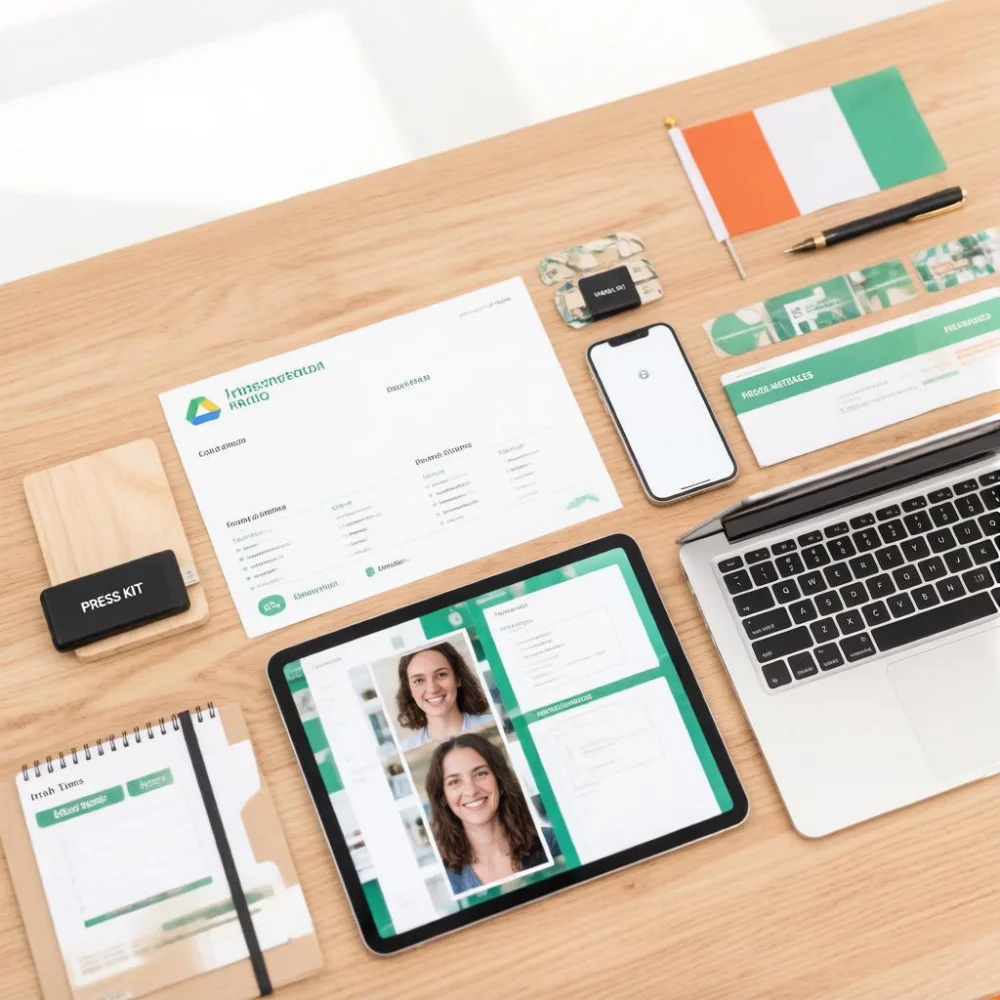
Step 5: Prepare Your Press Kit
A press kit is a folder of materials. Journalists use it to write their articles. Make their job easy.
Your press kit must include:
- A one-page fact sheet: company name, founders, year founded, location, funding total, number of employees, key product.
- High-resolution headshots of your CEO and CTO (JPEG, 300 dpi).
- Logos in different formats (PNG, SVG).
- A product screenshot or a short demo video (under 60 seconds).
- Two or three customer testimonials (with real names and company names, if allowed).
- Your core message triangle (as a separate document).
Put everything in a Google Drive or Dropbox folder. Share the link in your pitch email. Do not attach large files – that clogs the journalist’s inbox.
In Ireland, many journalists work from home or on the go. Make your kit mobile-friendly. Test it on a phone.
Step 6: Craft Your Pitch Email
The pitch email is your first impression. It must be short, direct and personalised.
Here is a structure that works:
- Subject line: “Hook + company name” (e.g., “Cork-based FinTech raises €2M to speed up SME payments”).
- Opening line: Refer to a recent article by that journalist. Say “I read your piece on SME lending – this connects.”
- Second line: State your hook in one sentence.
- Third line: Explain why this matters to their readers (not to you).
- Fourth line: Offer an exclusive interview with your CEO.
- Fifth line: Link to your press kit.
- Closing: Your contact details.
Keep it under 150 words. Journalists receive 200 emails a day. They scan. If your email is long, they delete.
Do not follow up more than twice. A polite follow-up after three days is fine. A third follow-up is annoying.
Step 7: Train Your Spokesperson
Your CEO or founder will do the interviews. They must be ready. Do not assume they are natural speakers.
Run a mock interview. Record it. Play it back. Look for these issues:
- Speaking too fast or too slow.
- Using jargon like “blockchain” or “API” without explaining.
- Going off on tangents.
- Saying “um” or “like” too often.
Teach them the “bridge” technique. When a journalist asks a hard question (e.g., “Are you profitable?”), they answer honestly and then bridge to their message: “We are not profitable yet, but we are growing 20% month-over-month, which shows strong demand.”
Also teach them to say “I don’t know” if they truly do not know. Do not guess. Offer to find out and send a follow-up email.
In Ireland, journalists value humility. Arrogance gets you a bad quote. A calm, honest founder gets respect.
Step 8: Pick Your Media List – Quality Over Quantity
For your first campaign, you do not need 50 journalists. You need 10 good ones.
Prioritise these tiers:
- Tier 1: Top business publications (Irish Times, Business Post, Irish Independent). They give you credibility.
- Tier 2: Tech and startup outlets (Silicon Republic, Irish Tech News, Fora). They reach your peers and early adopters.
- Tier 3: Regional press for your office city (Cork Independent, Galway Advertiser). They cover local jobs and community.
Send your pitch to Tier 1 first. Give them an exclusive window of 24 hours. If they do not respond, then pitch Tier 2 and 3. This creates a sense of urgency.
Do not send a mass BCC. That is lazy and obvious. Personalise each email. Mention the journalist’s previous work. That small effort doubles your response rate.
Step 9: Time Your Campaign Right
Timing matters in Ireland. Avoid these periods:
- August (many journalists on holiday).
- Christmas week to New Year (newsrooms are skeleton staff).
- Budget week (early October) – all business reporters are busy with government coverage.
- St Patrick’s week – press covers parades and politics, not fintech.
Aim for Tuesday, Wednesday or Thursday mornings. Monday is catch-up day. Friday is slow news day. Send your embargoed press release at 7:00 am so journalists see it when they start work.
Also align with your own milestones. If you have a funding announcement, send it the same day you close the round. Do not delay – news leaks fast.
Step 10: Prepare for the Interview
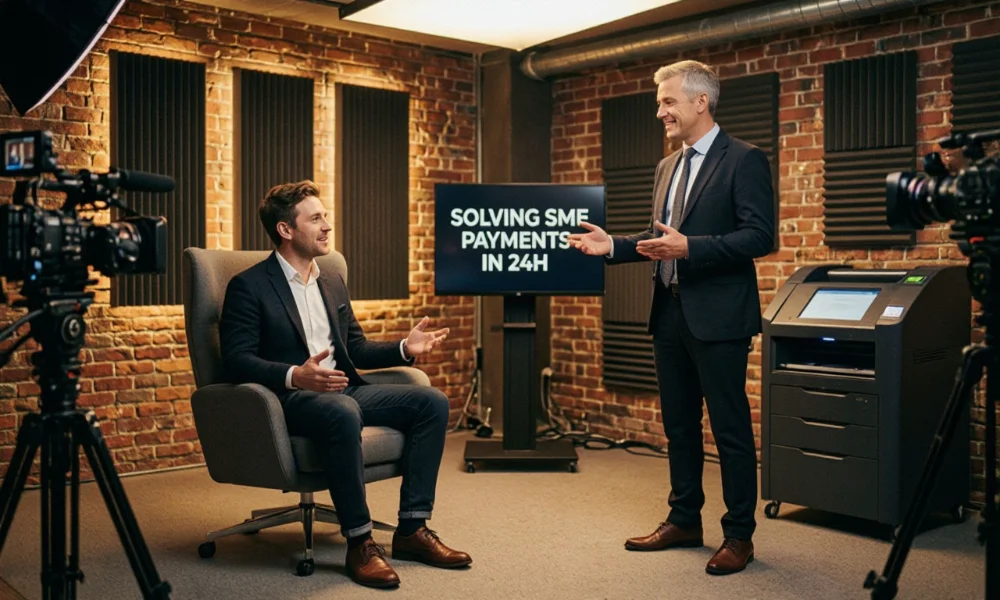
When a journalist says yes, you book a call or a face-to-face meeting. In Ireland, coffee meetings are common. Use them.
Before the interview, give your spokesperson a briefing sheet with:
- The journalist’s background and recent articles.
- The three core messages.
- Likely questions (from your mock session).
- Key numbers to quote (e.g., “we processed €10M in transactions”).
During the interview, the spokesperson should:
- Listen fully before answering.
- Give short, clear answers.
- Use examples (e.g., “one customer in Limerick saved 30 hours a month”).
- Ask the journalist if they need anything else.
After the interview, send a thank-you email within two hours. Attach any additional data they requested. This builds a long-term relationship.
Step 11: Monitor the Coverage
Once the article goes live, do not just celebrate. Monitor everything.
- Check if the journalist used your core messages correctly.
- Count how many times your company name appears.
- Look at the comments section (if any) – are people positive or skeptical?
- Share the article on your LinkedIn, X and company blog.
- Tag the journalist and thank them publicly.
But do not share every single mention. That looks desperate. Share only the best ones – the top-tier outlets.
Also track referral traffic from that article to your website. Use Google Analytics. If you see a spike, that means the article is working.
Step 12: Have a Crisis Backup Plan
Your first campaign might attract negative attention. A competitor might comment. A regulator might question your claims. A user might complain on social media.
Prepare for this before you pitch.
Write two holding statements:
- One for a minor issue (e.g., “We are aware of a technical glitch and are fixing it”).
- One for a serious issue (e.g., “We take data security seriously and are conducting a full review”).
Appoint one person to monitor social channels during the campaign week. That person alerts the team if anything negative appears.
If a journalist asks a tough question, do not hide. Respond within 24 hours. A non-response looks like guilt. A clear, factual answer builds trust.
Step 13: Measure Your Success
After the campaign ends, sit down with your team. Measure against your original goal.
If your goal was investor attention, count how many inbound emails you received from potential investors. If it was client leads, count the demo requests. If it was brand awareness, track your website traffic and social followers.
Also track the “share of voice” – how many articles mentioned you versus your top three competitors. In Ireland’s small market, even one extra mention is a win.
Write a one-page report for your board. Include the coverage list, the key quotes, the traffic numbers and the lessons learned. This report becomes your baseline for future campaigns.
Step 14: Keep the Relationship Warm
A campaign is not a one-night stand. It is the start of a conversation.
After the articles publish, stay in touch with the journalists who covered you. Send them relevant updates every few months. Not press releases – just a short email saying “we just hit 100 customers, thought you might like to know.”
Offer them exclusives on your next big news. Invite them to your office events. Remember their birthdays or work anniversaries (LinkedIn shows these).
In Ireland, relationships matter more than anywhere else. A journalist who knows you personally will give you a second chance if you make a mistake. They will also pick up your story faster.
Step 15: Learn and Improve for Next Time
No first campaign is perfect. You will make mistakes. That is fine.
Write down three things that went well. Write down three things you would do differently. For example:
- Went well: the press kit was easy to access.
- Could improve: our CEO spoke too technically in the first interview.
Share these lessons with your whole team. Update your PR playbook accordingly.
Your second campaign will be smoother. Your third will be even better. Each campaign builds your reputation and your media network.
Conclusion: Start Small, Think Long
Preparing for your first media campaign is a big task. But you do not need to be perfect. You need to be prepared, honest and local.
Focus on one clear hook, one strong message and a short list of targeted journalists. Train your spokesperson. Monitor the results. And always follow up with gratitude.
Ireland is a small country with a big voice in finance. A successful first campaign puts you on the map. It attracts talent, customers and capital. It also gives you the confidence to handle bigger stories later.
So take these steps. Build your press kit. Write your pitch. Pick up the phone. Your first article is waiting – make it count.