
A security breach is the worst day for any FinTech. Data leaks, unauthorised access or system outages hit your reputation hard. In Ireland, customers remember. They tell their friends. They post on social media. And the Central Bank of Ireland watches every move.
Trust is your only real asset. Lose it, and you lose customers, investors and partners. But a crisis does not have to destroy your company. With the right communications plan, you can contain the damage and even emerge stronger.
This guide shows you exactly how to manage a security breach from a PR perspective. It covers preparation, response and recovery. Every step is practical and built for the Irish market.
Step 1: Build Your Crisis Team Before Anything Happens
Do not wait for a breach to form a team. That is too late. You need a designated group with clear roles.
Your crisis team must include:
- A PR lead (in-house or agency) to handle media and statements.
- A legal advisor to check every word for regulatory risk.
- A technical lead (CTO or head of security) to explain what happened.
- A customer support lead to manage client queries.
- A CEO or founder to be the final decision-maker and spokesperson.
In Ireland, many FinTechs are small. One person may wear two hats. That is fine. Just assign clear responsibilities. Write them down. Share them with the whole team.
Also agree on a chain of command. Who approves a press release? Who calls the Central Bank? Who updates the website? Decide now, not during a panic.
Step 2: Write Your Holding Statements in Advance
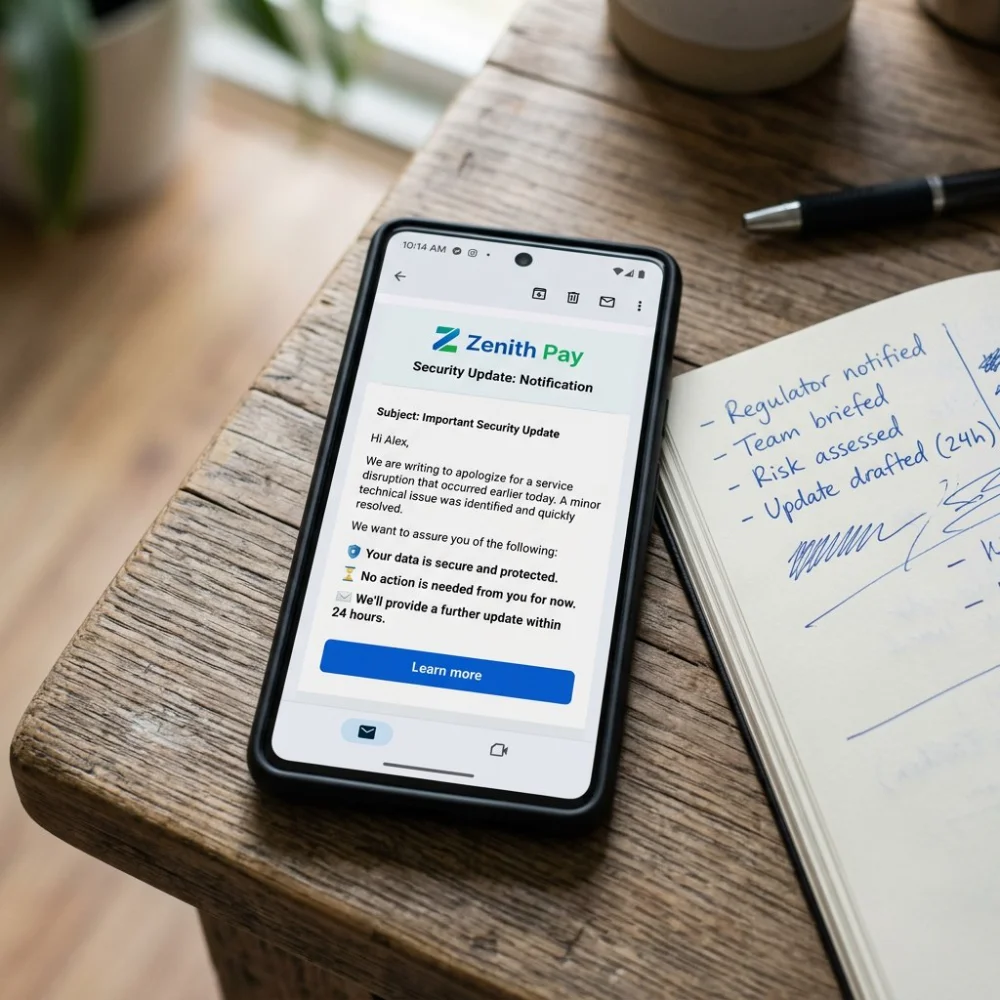
A holding statement is a short, factual response you issue within the first hour. You cannot write the full story yet, but you can acknowledge the issue.
Prepare three templates:
- Template A: A minor glitch that affects a few users (e.g., “We are aware of a temporary issue and are restoring service”).
- Template B: A moderate breach that exposes non-sensitive data (e.g., “We identified unauthorised access to a limited dataset. We are investigating”).
- Template C: A severe breach with customer financial data at risk (e.g., “We detected a security incident. We have notified the Central Bank and are working with forensic experts”).
Store these templates in a shared folder. Keep them simple. Leave blank spaces for the specific details you will add later.
In Ireland, the Data Protection Commission (DPC) requires you to report certain breaches within 72 hours. Your holding statement must not contradict that timeline. Mention that you are cooperating with regulators.
Step 3: Know Your Regulatory Obligations
The Central Bank of Ireland and the DPC have strict rules. You must tell them about a breach if it risks customer rights. Failure to report on time leads to fines and public sanctions.
Your PR plan must include a regulatory notification process. Designate one person to file the initial report. Do not let legal and PR teams work in silos. They must coordinate.
In your communications, you cannot say “we are fully compliant” if you are still investigating. That is a false statement. Instead, say “we are following all required procedures and will update as we know more.”
Irish regulators appreciate honesty. They do not appreciate spin. If you hide a breach and they find out, your penalty will be worse.
Step 4: Decide Who Speaks and When
In a crisis, everyone wants to comment. Do not let that happen. You need one official spokesperson. Usually the CEO or the PR lead.
That person must be available 24/7 during the crisis. They must have the authority to approve statements quickly. They must also be calm on camera and on the phone.
Train your spokesperson with mock scenarios. Record them. Play back and improve. Teach them to pause before answering. Teach them to use simple words like “we are sorry” and “we are fixing this.”
In Ireland, the media will call your office. They will email. They will find you on LinkedIn. If your spokesperson does not respond, a junior employee might say something wrong. So set a rule: only the designated person speaks to media. Everyone else redirects to that person.

Step 5: Notify Your Customers First
Do not let your customers learn about a breach from the news. That breaks trust instantly.
Your first communication should go to affected customers. Send an email, an in-app message or a text. Use plain language. Avoid jargon.
Example: “We found that some of your personal data may have been accessed without permission. We are very sorry. We have secured the system and are working with experts. You do not need to take any action yet. We will update you within 24 hours.”
Notice the key parts: apology, action taken, what they need to do (or not do), and a next update time.
In Ireland, customers value transparency. If you tell them quickly and honestly, they are more likely to stay. If they hear it from the Irish Independent first, they will feel betrayed.
Step 6: Prepare Your Website and Social Channels
Your website is your official source. Create a dedicated page for the breach. Use a simple URL like /security-update. Put a clear banner on your homepage linking to it.
On that page, post every update. Keep it factual. Date and time each entry. Do not delete old updates – that looks like cover-up.
On social media, post a short message directing people to the website. Do not try to explain everything in a tweet. That spreads confusion. Also turn off automatic posting. You do not want old promotional tweets going out while a crisis is active.
Monitor your social channels constantly. Reply to direct messages and comments politely. If someone asks a question you cannot answer, say “we are looking into this and will reply here shortly.”
Step 7: Handle Media Enquiries Systematically
Journalists will call. They will ask tough questions: “How many customers were affected?”, “Was it a state actor?”, “Why did your security fail?”
You do not have to answer every question immediately. It is okay to say “we are still investigating and will share verified facts later.”
But you must give them something. A holding statement. A timeline for the next update. A promise of an interview once you know more.
Keep a log of every media enquiry. Note the journalist, outlet, question and your response. This helps you track who you have spoken to and what you have said.
In Ireland, the media is persistent but fair. If you are open and responsive, they will report the facts. If you avoid them, they will dig deeper and find negative sources.
Step 8: Craft the Full Statement When Facts Are Clear
Within 24 to 48 hours, you should have a clearer picture. You know the cause, the scope and the fix. Now issue a comprehensive statement.
This statement must include:
- What happened (in simple terms).
- When it happened.
- What data was involved (e.g., email addresses, account balances, or payment details).
- What you have done to stop it.
- What you are doing to prevent it in future.
- What customers should do now (e.g., change passwords, monitor accounts).
- A contact point for further questions.
Do not speculate. Do not blame external partners unless you are certain. Do not exaggerate the damage or minimise it. Be accurate.
Also include a quote from your CEO expressing regret and commitment to security. Keep the quote short and human.
Step 9: Offer Compensation or Support Where Appropriate
If customer data was exposed, you may need to offer something. This could be free credit monitoring, a year of identity theft protection, or a small goodwill gesture.
In Ireland, the DPC encourages firms to take proactive steps. This shows you care beyond the legal minimum.
Announce this compensation in your full statement. Make it easy to claim. Do not hide it behind complicated forms.
This action rebuilds trust faster than any words. Customers remember what you did for them, not just what you said.
Step 10: Monitor Public Sentiment and Adjust
During the crisis, use a simple monitoring tool to track what people are saying. Look at X, LinkedIn, Reddit and review sites.
Are customers angry? Are they confused? Are they defending you? Adjust your communications based on that sentiment.
For example, if many customers ask the same question, add that question to your FAQ page. If they seem scared about their money, issue a reassurance that funds are safe (if that is true).
Do not argue with angry commenters. Respond with empathy: “We understand your concern. Please DM us so we can assist personally.”
In Ireland, the FinTech community is tight. Your reputation among peers matters too. Keep your responses professional and calm.
Step 11: Coordinate with Partners and Investors
Your partners – banks, payment processors, software vendors – will also be affected. Inform them before the media does. Send a brief email or call them.
Investors need to know too. They will hear rumours. Give them a factual update. Reassure them that you are managing the situation.
In Ireland, many FinTechs have a small investor base. Personal calls work best. Be direct. Do not sugarcoat. They will respect your honesty.
If you have a board of directors, convene an emergency meeting. Share the communication plan and get their approval on major statements.
Step 12: Learn from the Incident
After the immediate crisis passes, do a post-mortem. Gather your team. Review every decision.
Ask these questions:
- How quickly did we detect the breach?
- How quickly did we notify regulators and customers?
- Were our holding statements clear?
- Did our spokesperson handle interviews well?
- What would we do differently?
Write a report. Share it with the team. Implement the improvements in your security and PR plans.
In Ireland, the Central Bank expects you to show lessons learned. If you have another breach later, they will ask about your previous improvements.
Step 13: Rebuild Trust Through Positive Stories
Once the crisis is over, do not go silent. That makes people wonder what else is hidden.
Instead, launch a positive campaign. Share stories about your improved security measures. Announce new certifications (e.g., ISO 27001). Profile your security team. Explain how you are investing in better technology.
You can also sponsor a cybersecurity event in Dublin or Cork. Partner with a university on a research project. These actions show commitment.
But keep the tone humble. Do not say “we are now the most secure FinTech.” That invites scrutiny. Say “we have learned and we are getting stronger.”
Step 14: Keep the Regulator Informed Even After
Your relationship with the Central Bank and DPC does not end when the media stops calling. They will continue to monitor your progress.
Provide them with regular updates on your remediation plan. Meet with them if they request. Show them your new security protocols.
This proactive approach builds goodwill. When you next need their approval or support, they will remember your cooperation.
In Ireland, regulatory trust is a competitive advantage. A FinTech with a clean regulatory record attracts more customers.
Step 15: Turn Your Crisis into a Case Study (Internally)
Do not let the lessons fade. Turn your experience into an internal case study. Share it with new hires. Use it in team training.
Explain what went wrong, how you responded and what you changed. This makes your whole organisation more resilient.
You can also anonymise the case study and present it at industry events. That positions you as a transparent leader. Other FinTechs will respect your openness.
Just be careful not to disclose sensitive details. Stick to the communication lessons, not the technical vulnerabilities.
Conclusion: Trust Is Earned in Silence and Restored in Action
A security breach is a test of your character as a company. How you communicate during that test defines your future.
In Ireland, customers and journalists are forgiving if you are honest, fast and human. They are ruthless if you are evasive, slow or arrogant.
Prepare your team, your statements and your processes before the crisis hits. When it does, speak clearly, act quickly and show genuine care. After it passes, rebuild with visible improvements.
Your FinTech will not be the first to face a breach. But it can be one of the few that handles it well. That is how you keep customer trust – and that trust is the only thing that really matters in the long run.