
PR for the iGaming Industry: Why Generalist Agencies Struggle and What Works
The online gambling industry has grown rapidly in recent years. New online casinos, sportsbooks and betting platforms launch every month . Many licensed operators have strong products, proper funding and clear growth plans. But they face a problem that other industries do not: getting their story into the media is unusually difficult.
This creates a challenge for PR agencies that work with iGaming brands. The approaches that work for fintech, tech or professional services often fail in gambling. Understanding why this happens matters for any agency considering work in this space.
Why iGaming Brands Get Ignored
The first problem is media resistance. Many mainstream publications have policies that restrict or ban gambling content . Even when outlets are open to it, editorial teams often deprioritise gambling stories. This is not because the stories lack interest. It is because gambling is seen as sensitive or controversial.
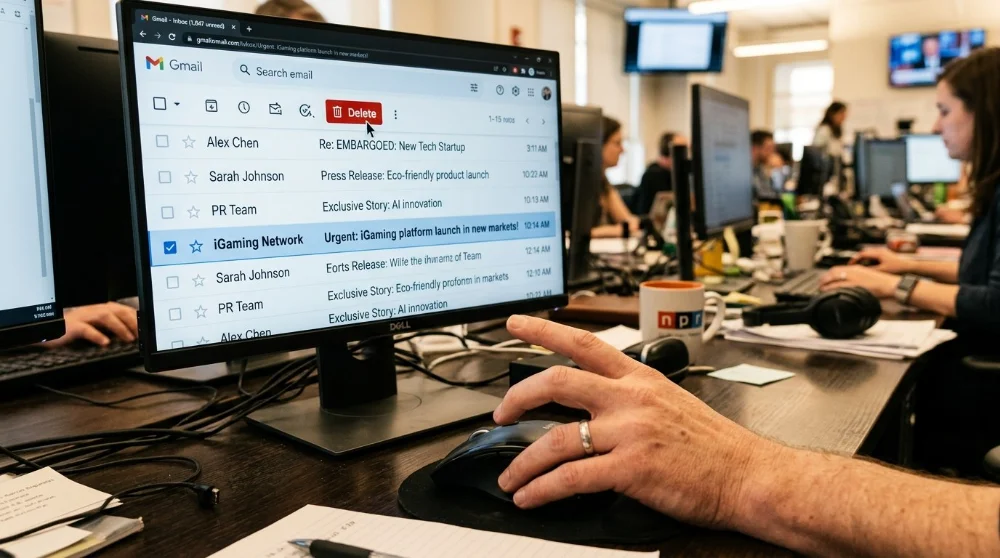
The second problem is the pitch model. Most PR agencies write press releases and send them to journalists. They hope someone will pick up the story. In most industries this works often enough to justify the effort. In gambling it works much less frequently. Journalists already receive a high volume of pitches. Gambling pitches often go to the bottom of the pile .
The result is that many iGaming brands pay for PR campaigns that produce little or no published coverage. The agency does the work. The client pays the bill. Nothing appears in the press . This is not a good outcome for either party.
The Data on Industry Open Rates
Recent research shows that media responsiveness varies significantly by industry. A report from Intelligent Relations found that financial services clients had email open rates of 61% from journalists, well above the PR industry average . Gaming clients, which included video game companies as well as iGaming, had open rates of 68% and placement rates above 9% .
That sounds encouraging. But the same report found that fintech companies had open rates of only 35%, and IT companies had just 33% . The difference is that fintech and IT stories often focus on technical or niche topics that fail to generate broad appeal . Gambling stories face a similar problem. They are often perceived as niche, even when they have wider relevance.
Financial services work because they provide narratives with broad societal relevance. Journalists want to know about economic trends, investment opportunities and regulatory shifts . iGaming stories can achieve this when they are framed around regulation, market growth or commercial partnerships. When they are framed only around product launches or promotional offers, they rarely break through.
How Some Agencies Solve the Problem
Some PR agencies have developed alternative approaches for the iGaming sector. The core idea is to remove the uncertainty of the pitch model .
One approach is to own the media outlets where client content gets published. If an agency owns a network of news websites, it can guarantee publication without relying on journalists . The agency controls the editorial calendar. The content appears on schedule. The client knows exactly what they are paying for.
Kooc Media has built this model for crypto, fintech and iGaming clients. The agency owns sites including Blockonomi, CoinCentral, MoneyCheck, Parameter, Beanstalk and Computing . These are real publications with real readerships. They cover finance, technology and digital entertainment. Gambling content fits naturally within this editorial environment .
When a client books a campaign, Kooc Media confirms exactly which websites will carry the article before the campaign begins . The client sees the placement list and agrees to it. No pitching. No hoping. No empty campaigns .
Another approach is to combine owned-site placements with newswire distribution. Premium packages can place press releases on major platforms like Business Insider, Bloomberg, Benzinga, MarketWatch and USA Today . This moves the brand beyond niche gambling media and into mainstream business press. The credibility shift is significant. An operator covered on Bloomberg looks like a business that happens to be in gambling, not just a gambling business .
Creative Campaigns That Work
There is also a role for creative, non-technical campaigns. One example is the “Simpsons Series Analyst” campaign for PlatinCasino.co.uk. The agency created a fake job ad offering £5,000 to watch every episode of The Simpsons and note storylines that had predicted real-world events . They offered odds on future events coming true.
The campaign earned more than 200 pieces of coverage, including Rolling Stone Brazil, The Mirror and The Sun . It generated 51,000 applicants. It also improved the client’s search ranking for “online casino UK” from position nine to number one in one day . The campaign worked because it was creative, media-friendly and had mass appeal.
Lessons for Simpson Financial & Technology PR

For an agency like Simpson Financial & Technology PR, which works with fintech and financial services clients, the iGaming sector offers growth opportunities. But the standard pitch model may not work well. The industry faces media resistance that other sectors do not.
One approach is to develop relationships with publications that already cover gambling content. Another is to build a track record of creative, newsworthy campaigns that journalists actually want to cover. A third is to offer guaranteed placement models that remove the risk for clients .
The iGaming market is growing. More operators are entering regulated markets and need media coverage to build brand recognition and player trust . For an agency that understands the industry’s challenges and can deliver reliable results, this is a real opportunity.